



Bordeaux 2025 – FLASH Update (Post En Premier Tastings)
Our team has returned from a gruelling week in Bordeaux - yes, apparently drinking all that wine is hard work (!). We tasted hundreds of Bordeaux 2025 wines, and grilled scores of négociants and châteaux owners on what to expect from the campaign.
Here is what we found out:
Bordeaux 2025 is a "new benchmark"
Whilst growing conditions in 2025 were similar to 2022, the wines are completely different in style.
In the middle of the growing season it looked like 2025 would produce even bigger and more concentrated wines than 2022, due to high levels of sunshine and hydric stress throughout summer. A number of properties registered potential alcohol of 15.5%+ in June / July. But the situation was transformed by rain in late August, which arrived just before the harvest. ABVs dropped significantly – to a much more moderate range of 13.0- 13.5%. Wines like Cheval Blanc came in at just 12.7%.
Tannins and acidity remained elevated at many estates, however, and wine-makers had to be very careful managing their extraction process. Gentle vinification was the key in 2025, and those who got it right produced wines are at the same time concentrated, but also delicious and highly drinkable! We suspect that many of these wines will score very well. Informal conversations with leading critics confirmed this view.
In terms of comparable vintages, our team were at a loss to think of another vintage with quite the same characteristics as 2025. But in terms of quality, our team agreed with the verdict of Bordeaux critic Colin Hay of Drinks Business:
'Bordeaux 2025 is the qualitative equal of each of these Bordeaux legends … 2010; 2016; 2019; 2020; 2022 … 2025'.
Colin Hay (Drinks Business)
Yields are Dramatically Lower
Yields in 2025 were always going to be low.
The poor growing conditions of 2024 (patchy fruit set and bad weather during flowering) combined with the hydric stress through most of 2025 to reduce yields severely across the main appellations. Many leading properties made just 50% of their usual production. As an example, Cheval Blanc yielded just 15 hectoliters / hectare in 2025 (even Romanée-Conti manages 25hl/ha). Neither Cheval Blanc nor Ausone made second wines this year. The lack of volume, in bottle terms, is going to be very noticeable in 2025.
Bordeaux 2025 Highlights
2025 produced some truly great wines on both the Left and Right Banks. The overall style is the most interesting thing, and understanding how unique these wines are is key to understanding this vintage.
Many of our fellow tasters said that they had no experience of tasting anything like the 2025s.
A frequent remark (even from the châteaux owners) was that 2025 represented a “new benchmark” or “reference point” for their estates. What is unique in 2025 is the combination of ripe, concentrated, beautifully clean, fresh fruit, with incredibly silky tannins, and low alcohol. This combination is very rarely found in one vintage.
Our tasting notes reveal the Left Bank and St Émilion to have been more consistent than Pessac and Pomerol. Sauternes and Bassac also performed extremely well, and 2025 will be a top vintage for sweet whites.
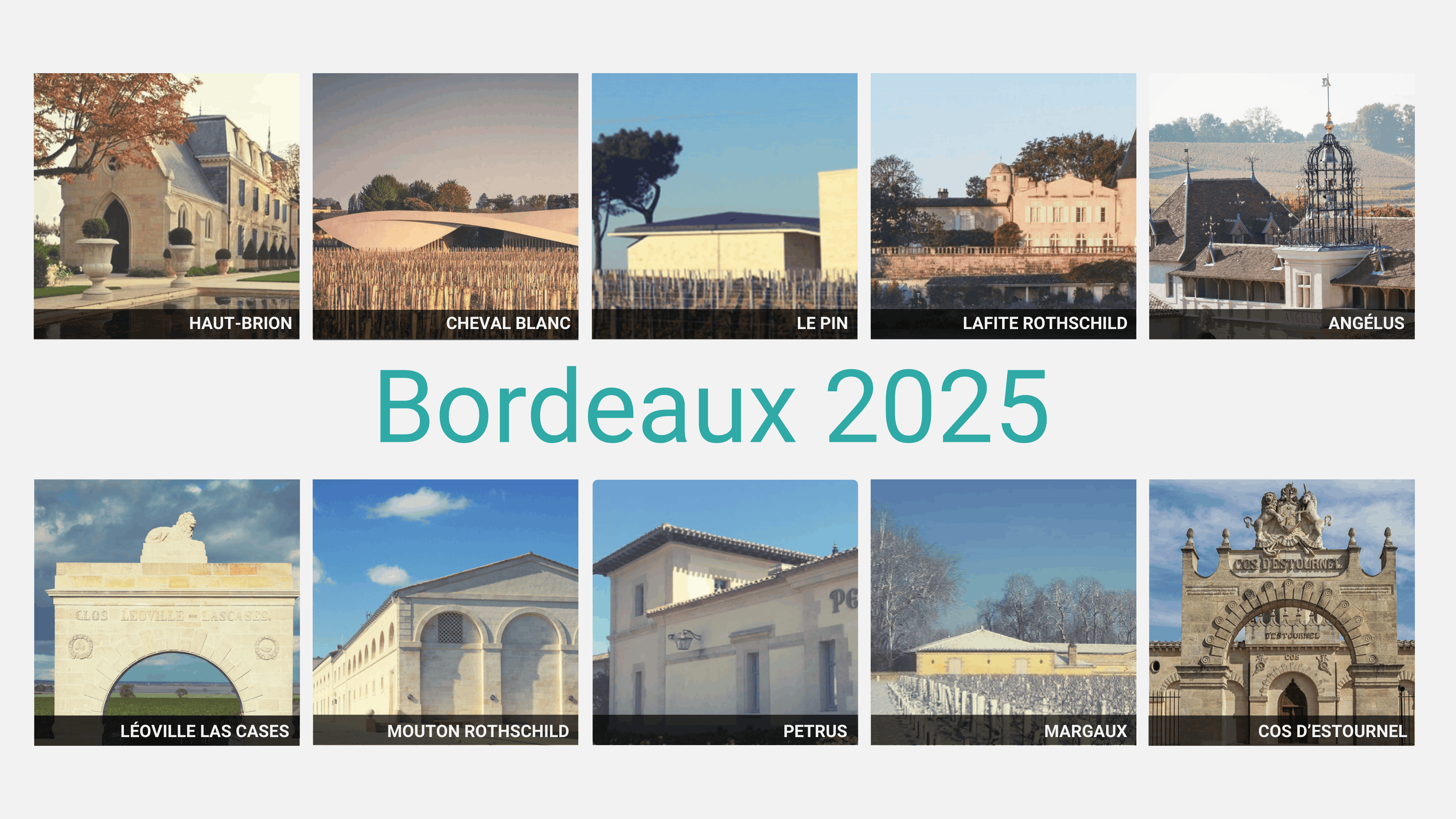
Highlights from our tastings were: Lafite Rothschild, Mouton Rothschild, Pichon Lalande, Montrose, Figeac, Canon, Vieux Château Certan and Les Carmes Haut-Brion. There are some great value picks also like Léoville-Poyferré, Batailley, La Gaffelière, Beau-Séjour Bécot, Domaine de Chevalier, Château Le Thil, and Laroque, to name just a few.
Pricing and Timing
On pricing, we heard a number of different things – but three considerations kept recurring: i) many chateaux owners believe they made a unique and exceptional wine in 2025, ii) volumes are going to be some of the lowest ever, and iii) prices were crushed lower in 2024.
In this environment, it is reasonable to expect modest price rises versus last year (because 2025 is not at all comparable to 2024 in quality). Chateaux like Canon said they would probably increase modestly over 2024 based on the major uplift in quality at the property.
The reference point should not be 2024, however, but vintages of comparable quality. We will follow Colin Hay's analysis and assess 2025s prices against the comparable vintages of 2022, 2020, 2019, 2016 and 2010, and we are hopeful that 2025 will represent genuine value in that context.
On timing, we understand that Pontet-Canet will be released during the week of 27th April, as the Pauillac estate maintains its historical role of 'campaign opener'.
We are unlikely to have any major critic scores published by this time, however, so the main body of releases may take a few more weeks to emerge.
Our impression is that châteaux know they have a high quality, super interesting, vintage on their hands with 2025. And they also have much less to sell than usual. They will not, therefore rush their releases, and wines will most likely emerge at a measured pace, and most not before most major critics’ scores are published.
Overall Summary
All in all, we came away from Bordeaux feeling more positive about an en primeur campaign than we have for some years.
We are confident that the era of denial is finally over in Bordeaux, with leading figures lining up to pronounce that en primeur has to "work" this year.
The price reductions of 2024 set the foundations. And mother nature has delivered (we believe) a vintage that many collectors will really want/need to own. The argument that you can afford to ‘wait’ and buy later has been strong for the past few vintages. But with volumes so much reduced in 2025, we believe that 'sold out in Bordeaux' might once again return to this campaign’s lexicon.
The next few weeks will show if we are right…